
ROV Studios · Web Design · Missed-Call Text-Back for HVAC
The Call You Miss on a Job Goes to the Next Truck. Unless It Texts Back.
When a homeowner's AC dies in July and your crew is elbow-deep in another job, the call rings out and they dial the next HVAC company on the list. Missed-call text-back replies in under 30 seconds and keeps the job yours, on a website built to get you found in the first place.

The short answer
Missed-call text-back is an automation that texts a homeowner within seconds of a call you could not answer, so they book with you instead of dialing the next HVAC company on the list. It is the single sharpest automation an Atlanta shop can turn on, because it plugs the leak that costs you the most during the season you can least afford it.
It is a Tuesday afternoon in Grant Park and it is 96 degrees. A homeowner's AC just quit. She grabs her phone and calls the first shop she finds. Your crew is under a house in Marietta and nobody is at the desk. The phone rings out. She does not leave a voicemail. She just hangs up and calls the next number.
The short version
Every call your crew misses on a job is a homeowner ready to book right now. Missed-call text-back replies in under 30 seconds and keeps that homeowner in a conversation with you. Paired with a fast website that shows your reviews and a way to book, it turns the calls you cannot answer into jobs on the board. ROV builds both for a $750 build fee, runs it free for 30 days, then $1,000 a month.
That gap between the calls you get and the calls you actually book is a revenue leak. In peak summer it is the most expensive leak you have, because the phone is ringing more than any other time of year and your crew is too busy to answer it.
Where a missed call actually goes
A missed call in July does not wait for you to call it back. It goes to the next shop in the homeowner's phone. When a system is down and the house is hot, nobody sits and waits for a callback. They work down the list until someone picks up, and the shop that answers first is usually the shop that gets the job.
That is why showing up fast beats everything else you could compete on. You do not have the ad budget the big names have. What you have is speed, and speed is the one lever a two-truck shop can pull to beat a company ten times its size. Missed-call text-back is how you pull it without being chained to the phone.
Businesses that respond to a new lead within an hour are about seven times more likely to have a real conversation with them than those that wait longer. Under 30 seconds beats an hour every time.
Source: Harvard Business Review
The same math works on the estimates that go quiet. A homeowner who got a quote and never called back is a warm job sitting in your phone. The system that texts a missed caller can also re-touch a dead estimate a few days later, and that alone pulls a chunk of ghosted quotes back onto the schedule.
See it work
A real missed call, turned into a booked job on the calendar, start to finish. Tap replay to watch it again.
No app for the homeowner to download. It is a normal text, from your shop, sent the instant the call is missed.
What is missed-call text-back?
Missed-call text-back is an automation that watches your business line and, the moment a call goes unanswered, sends the caller a text in your shop's voice. There is no new phone to carry and no app for the homeowner. It runs quietly in the background and only speaks up when a call would have otherwise been lost. Here is the whole thing, start to finish.
A homeowner calls and you can't pick up
Your crew is in an attic in Marietta, the office line is already busy, or it is 9pm on a Saturday. The AC is dead and the homeowner is dialing HVAC companies one after another. The call rings out.
A text goes out in under 30 seconds
The moment the call is missed, the system texts the homeowner in your shop's voice: sorry we missed you, we're on a job, want us to get you on the schedule today? It lands while your name is still on their screen.
The homeowner replies and the job is yours
They text back instead of calling the next number. The system can hand off to you, drop a booking link, or push the details straight to your phone. The call you physically could not answer becomes a job on the board.
“You cannot answer every call when your crew is on a job. You can make sure every caller still hears back before they dial someone else.”
Does it actually book more jobs?
Yes, because in home services the fastest response usually wins the job, not the lowest price. A homeowner with a dead AC calls two or three shops and books whoever gets back to them first while the house is still hot. When you are the one that answers in seconds, you are the one that gets on the schedule, even against a bigger name with a louder brand.
It also works because it never forgets. A person at the desk misses calls during the lunch rush, forgets to call back the estimate from Tuesday, and clocks out at 5pm. The automation catches the after-hours call, the weekend call, and the mid-job call every single time, without you thinking about it. During the busy months, that is the difference between a full board and calls quietly leaking to the shop down the road.
One recovered job in peak season usually covers the whole month it costs to run. Everything the system books after that is margin you were leaving on the table.
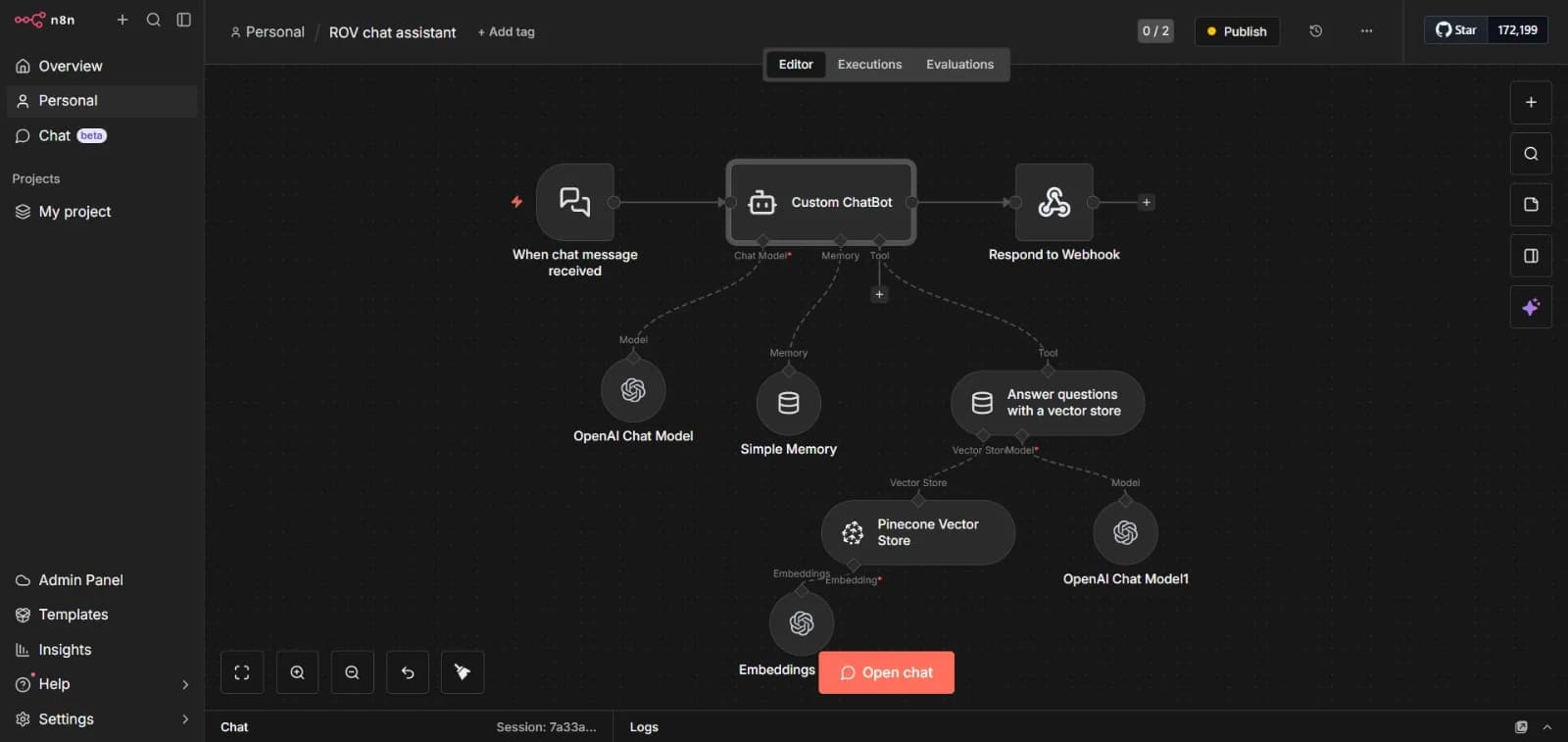
Why the site and the text-back belong together
The text you send has to land somewhere, and that somewhere is your website. When the homeowner taps the link, they either see a fast, clear site with your reviews, your service area, and a simple way to book, or they see a stock-photo page from 2016 that loads slowly and tells them nothing. One closes the job. The other loses the homeowner you just worked to keep.
The same website is also what puts you in front of that homeowner in the first place. A site that clearly says who you are, which counties you cover, and that shows real reviews is what earns you the Map Pack spot when someone searches “AC repair near me” at midnight. The site gets you found, the text-back keeps you from losing the call, and the two only work at full strength together.
That is why ROV builds them as one system, not two purchases. You get a website built to get you found and a missed-call text-back that catches what the site brings in. If you want the whole picture on the site side first, start with ROV web design and the rest of our AI automations for Atlanta businesses.
What it looks like when the trucks stay full
Picture a week in July where not a single call leaks. Your crew works the job in front of them without the guilt of a phone buzzing in a pocket nobody can reach. Every missed call gets a text before the homeowner moves on, and by the time you check your phone at lunch there are three new jobs already texting back with the times that work for them.
The shoulder season stings less too, because the estimates that used to go quiet get a nudge and some of them come back. You stay the shop that answers, the one on a first-name basis, the one that shows up, without having to be the one holding the phone at 9pm on a Saturday. That is what the automation buys you: your name stays the first one homeowners reach, and your time stays yours.
The short version
A website that gets you found plus a text-back that catches every missed call means the calls stop leaking to the shop down the road. You keep more of the jobs the summer sends you, and you stop trading your evenings for the fear of a missed call. The trucks stay full, and you are not the one glued to the phone to keep them that way.
What it costs and how to start
ROV builds the website and the missed-call text-back system together for a $750 build fee, then runs it free for 30 days so you see the booked jobs before you commit to anything. After the free month it is $1,000 a month with a three-month minimum. Here is exactly what is in it.
| What you get | Details |
|---|---|
| $750 build fee | The website and the missed-call text-back system, built and launched |
| 30 days free | Run it live and count the booked jobs before you pay a retainer |
| $1,000 / month | Ongoing after the free month, three-month minimum |
| Under 30 sec | Response time on every missed call, 24/7, mid-job and after-hours |
The first month is free for a reason. One recovered job in peak season usually covers what the whole month costs, so you get to watch it pay for itself before there is a bill. If it does not book you work, you have not lost anything but a build fee for a website you keep either way.
Where this goes next
Missed-call text-back is the front door, not the whole house. The moment it starts running, every homeowner who texts you back becomes something you did not have before: a name, a number, and a record of what they needed and when they needed it. Catching the call is step one. What you do with that growing list is where the real compounding starts.
Over a summer you are not just saving calls, you are quietly building a list of every homeowner who ever reached out, sorted by what they need and when. That list is the fuel for everything else, and each piece runs on the same system already sitting on your line.
What the data turns into
- →Seasonal tune-up textsThe homeowner who booked an AC repair in July is the one you text in October for a furnace tune-up. Predictable work in the shoulder season, from a list you already own.
- →Dead-estimate re-touchEvery quote that went quiet gets a nudge a few days later, automatically. A chunk of ghosted estimates come back on the schedule without a single cold call.
- →Review and referral loopsThe job that closes with a happy homeowner triggers a text asking for a Google review, then a referral. Your Map Pack spot and your reputation build themselves.
- →A funnel that starts warmInstead of starting from zero every spring, you start from a base of homeowners who already know your name. That is the difference between chasing work and having it waiting.
That is why the single automation is only the start. It pays for itself catching calls, and while it does, it quietly builds the list that keeps the trucks full year-round. When you are ready to turn that list into the full system, that is exactly what the rest of our AI automations for Atlanta businesses are built to do.
Related reading
Frequently asked
Sources
- Harvard Business Review · responding within an hour makes a real conversation about 7x more likely
- ServiceTitan · speed-to-lead and how HVAC companies win the call
Suchet Konda
Co-Founder and Systems Architect, ROV Studios
Last updated July 5, 2026
See how many calls your shop is missing
We run a free audit for Atlanta HVAC shops. We look at your site, your Map Pack spot, and where calls are leaking, then show you what missed-call text-back would catch. First month is free, so you count the jobs before you pay.